
Creative Movement Mastery
November 13 – 15, 2026 | Boulder, CO
You have a client right now. You know the one.
You've thrown everything at them: the progressions that usually work and the cues that land for everyone else. You've used the movements from the course, the variations you've cobbled together since, and the stuff you've watched me do so many times you could probably lip-sync my explanations.
But none of it's solving the problem.
And somewhere in the back of your brain, there's this annoying little voice: Maybe I'm not actually that good. Maybe I just got lucky with my other clients. Maybe there's a right answer somewhere and I'm too dumb to find it.
Yeah, no. You're not dumb. The answer doesn't exist yet.
Nobody's invented it. That's the problem.
This course is where you learn to be the one who invents it.
Creative Movement Mastery is three days of learning how to build movements from scratch. You'll leave with a process, movements you created yourself, principles burned deep enough that you can keep generating forever, and a movement library that's yours.
Movement Creation is a Skill. Not a Gift.
Let's kill the myth right now: you don't need to be some kind of creative genius to do this. You need a method. And I'm going to teach it to you.
Start with the problem, not the exercise. What’s your hypothesis? What tissue needs to change? What capacity is missing? What quality is janky? Most people start by flipping through their mental Rolodex of exercises, but that's backwards. The exercise is the last thing you figure out, not the first. I'll show you how to start with the problem.
Know your constraints. What can this body actually do right now, with this injury history, with this equipment, on that team, with this much buy-in? What positions are available? What's off-limits? Constraints aren't annoying obstacles to route around — they're neon fucking signs pointing you in the right direction if you know what to do with them.
Know what "working" looks like. How do you know the movement you just made up is actually working? Achilles wrinkles, where did the movement initiate, pain disappearing, felt tension in the right place, accurate motion without substitution—you need to know what to look for once you prescribe it.
Iterate. It didn't work. Cool. Now what? Most people just take a random walk through Exerciseland. You'll get a system: mass, acceleration, gravity orientation, range, cue, tempo, things you can tinker with deliberately so your next guess is better than your last one.
Let’s say you need to load the Achilles, but standing heel raises aren't creating tension. Okay. So what position, angle, or resistance would get tension through that Achilles in this person's body? Seated? Leg press? Band pulling them backward? Now you're inventing.
The Brilliant Paradox of Constraints
Most people think creativity means freedom, that a blank canvas and infinite options means you can make whatever you want. It sounds inspiring AND it's also completely useless.
Because that's not how creativity works, especially when it comes to movement.
Real creativity comes from limits. When you deeply understand what's available and what's needed, the movement almost designs itself. It might look like you're pulling ideas out of thin air, but you're letting the problem show you the solution.
So what does it actually look like to work within constraints? What are the tools that turn limits into raw material?
Variables, Your New Favorite Toys
Mass and acceleration are your two big dials. But zoom in and you've got a whole mixing board: external load, internal load, lever length, tissue length, speed, time under tension, fatigue, rest intervals, direction of resistance, orientation to gravity. Each one is a lever you can pull when something isn't working.
When the current version of a movement isn't working, you don't throw it out like an amateur; you fuck around and find out. Heavier. Lighter. Slower. Different angle. Rotate the body in space and suddenly you've got ten movements instead of one.
Most people think in exercises: "I need a glute exercise." But YOU? You're going to learn to think in variables: "I need hip extension and internal rotation, and here are the seven ways I can get it." Once this clicks, you'll feel like you've been doing Sudoku with half the numbers missing your entire career.
Your Library, Not Mine
Here's what this makes possible: you walk out with a movement library that actually belongs to you.
You're not leaving the course with "Austin's greatest hits" (though I will share a few faves). You're leaving with your movement library: movements you created, for problems you've actually encountered, based on principles you understand well enough to keep building forever.
The library is the output of that understanding. It keeps growing after you leave because you know how to grow it. Two people could take this course with identical clients and leave with completely different movements. Your library reflects your clients, your constraints, your creativity
I'll be honest: I'm actively trying to make myself obsolete here.
When to Invent vs. When not to
You need to know when to get creative and when not to.
One thing I’ve learned after years of teaching this course is that a lot of you like to overthink the problem. Not every client needs a bespoke artisanal hand-crafted movement. Sometimes a heel raise is just a heel raise. Did you actually try the boring thing with accuracy and enough volume? Is the problem a missing movement or a missing capacity in a movement they already have? Are they stuck or are you just impatient?
Invention is a tool. Knowing when to leave it in the holster is part of mastery. I'll teach you that too.
What Three Days Gets You
Teaching creative movement requires creative teaching, so this schedule is subject to change.
Each day will have a mixture of the following themems:
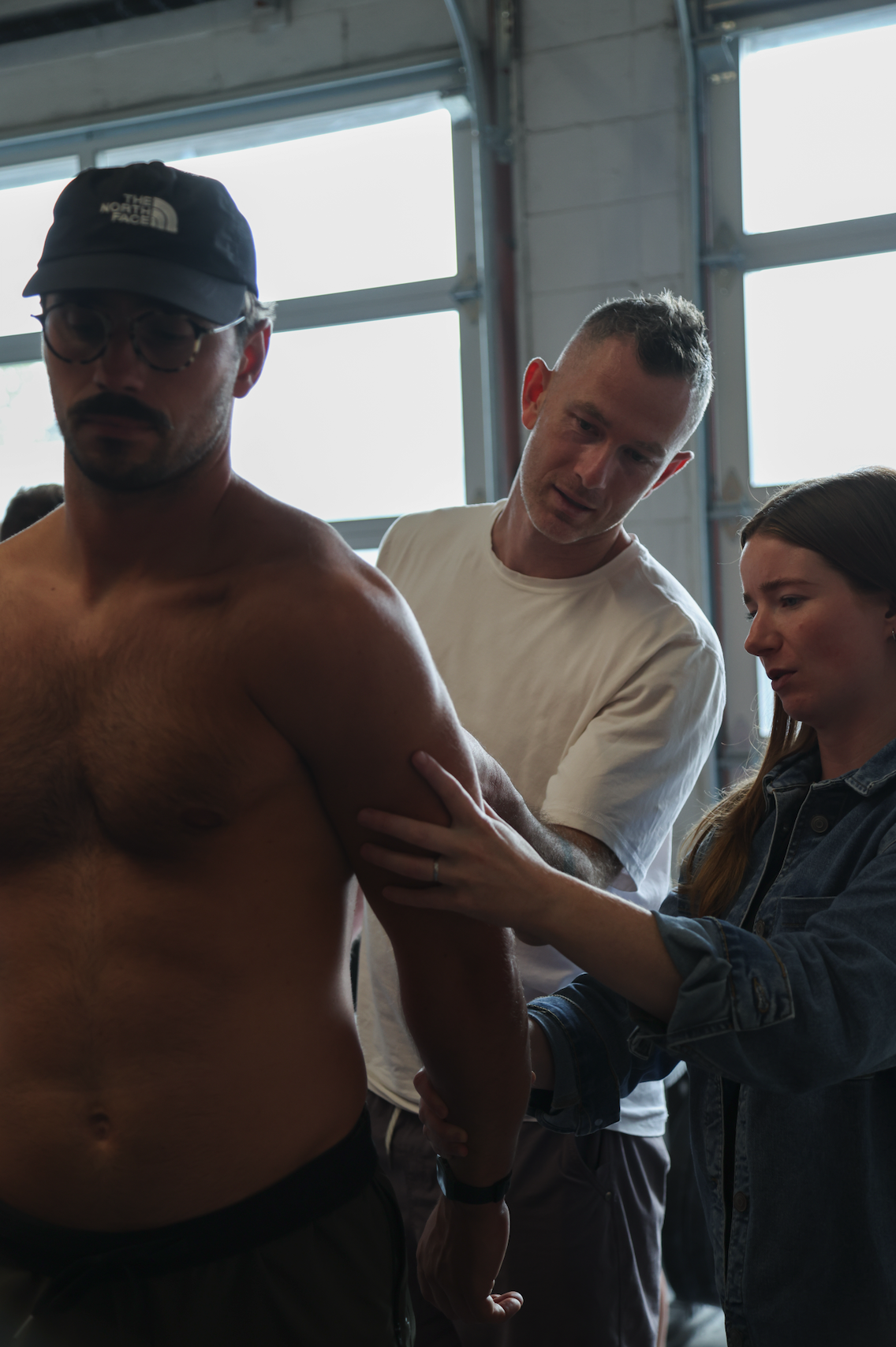
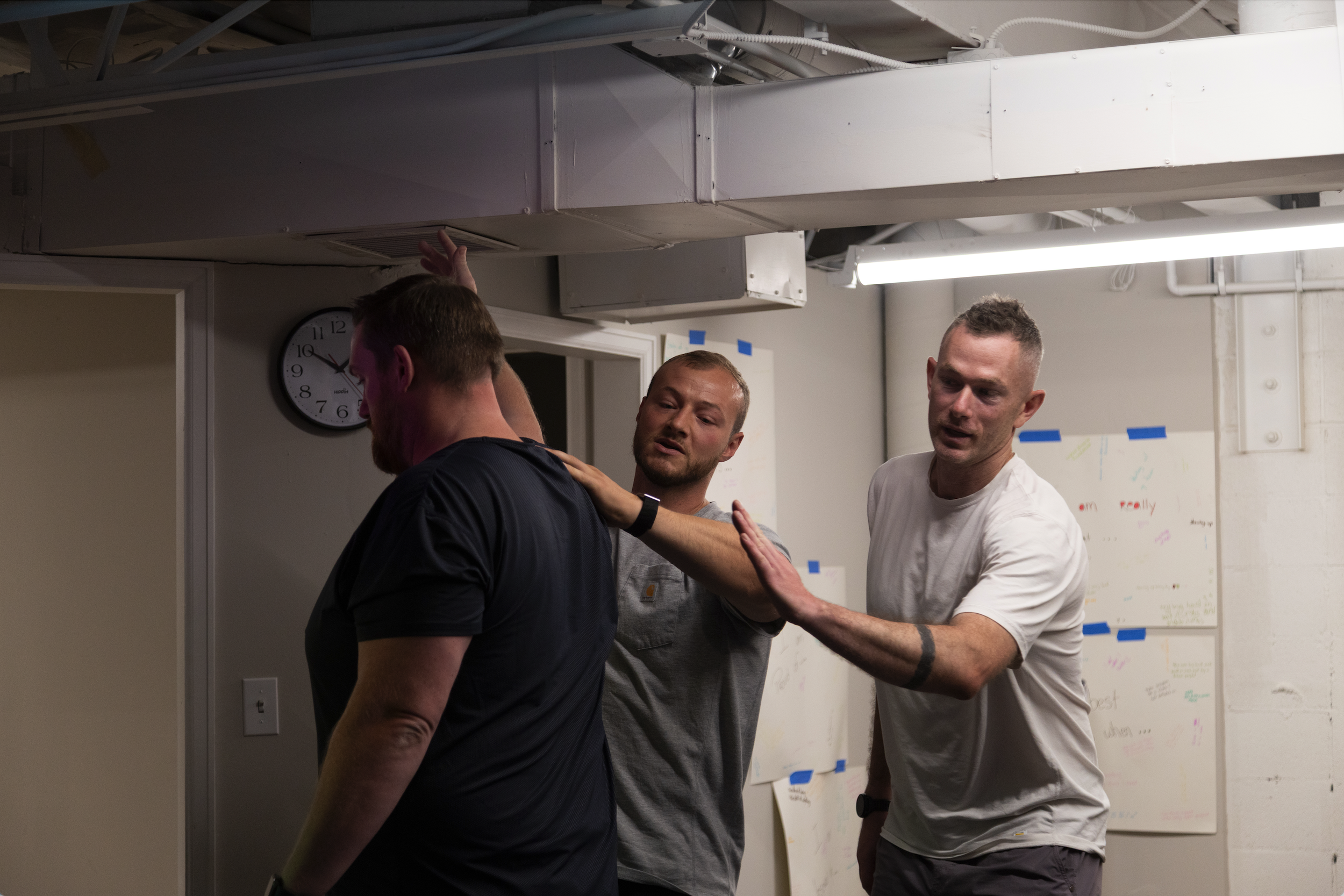
Principles. Anatomy, force multipliers, tissue demands, anatomy, the variables and how to use them, movement quality markers, and did I mention anatomy? You'll watch me create a movement from nothing, narrating my brain the whole time so you can see how the thinking works. Then you're doing it yourself. No hiding in the back pretending to take notes.
We’ll also practice making good hypotheses because the more accurately you define the problem, the clearer the answer becomes. Then we’ll test them.
Invention. You'll build movements in real time—start from a problem, work through constraints, test it, watch what happens, adjust, repeat. We’ll get into more specific anatomy and figure out how to invent movements that isolate things like the extensor digiti minimi. Or the properties of the flexor hallucis longus that externally rotate the tibia.
I'm coaching the process live so you can see the decision-making at each step. By the end of the day, you'll have created things that literally did not exist when you woke up that morning. I've done this enough times to know: the feeling of telling your client that you’ve never done this before and invented a movement just for them, well, it never gets old.
Pressure-testing. You’ve documented everything you built. Then we swap libraries and try to break each other's logic. Where are the gaps? What problems are you still not sure how to solve? You leave with a framework for continuing to create long after you've left Boulder and forgotten what my face looks like.
And then?
Your next client shows up with something you've never seen, some combination of history, substitutions, and limitations that doesn't map onto anything familiar. And instead of panic or "let me get back to you," you have a process. You know what questions to ask, what to try, what to watch for. You can think on your feet because you understand the principles underneath.
Look, the broader field is crowded as hell. PTs, S&C coaches, movement people of every flavor—most of them pulling from the same playbooks, the same weekend certifications, the same recycled exercises with different names. When someone has a case that nobody can figure out, what makes them send it to you instead of the twelve other “qualified” people in their phone?
This is a big part of the answer: the Evolved Coach methodology AND the ability to create solutions that don't exist yet.
There's a version of your career where you're a solid Evolved Coach with good outcomes, happy clients, a practice pays the bills. That's a great career. Honestly.
And there's a version where you're the person other practitioners call when they've run out of ideas. The one with the reputation for solving what nobody else can solve.
Mastery is where those two paths split.
Small. Rare. In-Person Only.
I can't teach this over Zoom. Believe me, I would if I could. But movement creation doesn't work through a screen with forty people and a chat box. It has to be small. It has to be live. It has to be in the room, with bodies, in real time.
Which means I can only run this occasionally, and spots are genuinely limited.
Dates: November 13 – 15, 2026
Times: 9-3:30ish
Location: Boulder, CO
Prerequisite: Evolved Coach course
Investment: $1,500